
Donald Charles Morton ( 1933-2026)
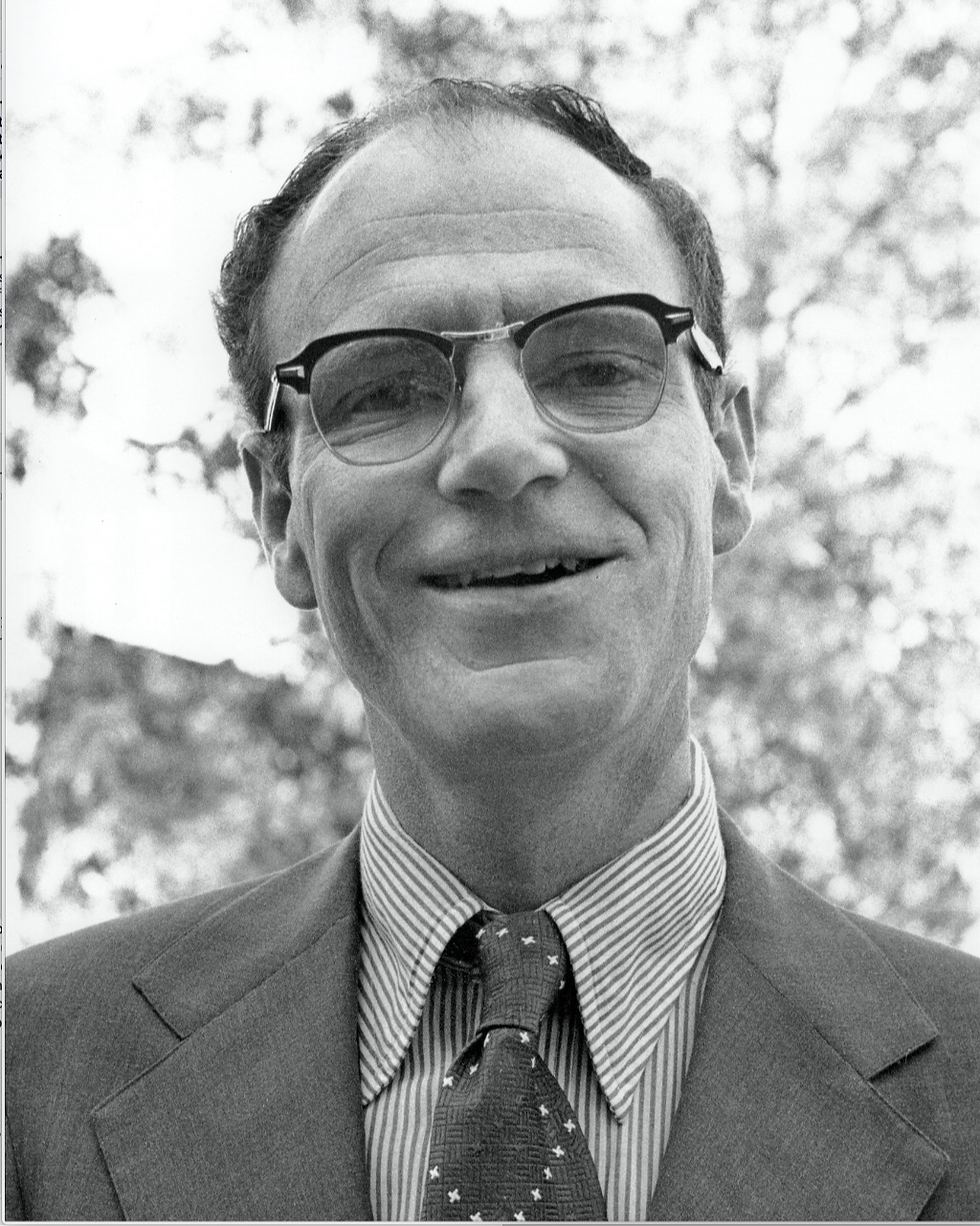
The family of Donald Charles Morton announced
his peaceful passing on Sunday, April 26th, 2026, at nearly 93 years old. Don was an internationally recognised astrophysicist, accomplished mountaineer, and life-long Meccano hobbyist. He will be remembered for his enduring curiosity, commitment to excellence and detail, extraordinary perseverance, and joy when out-of-doors.
Don was born on 12 June 1933 in Kapuskasing, in Northern Ontario. He grew up in North Toronto, where he and his mother Irene (Wightman) lived with her parents. They made regular visits to Wendigo Gold Mine near Kenora, ON, where his father Charles Orr Morton worked as an accountant. He greatly enjoyed his activities with Boy Scouts, which prepared him well for his later mountaineering, and regularly explored to the edge of the city on his bicycle. His interest in astronomy and engineering began at a very early age. This led him to attend Northern Vocational School (now Northern Secondary) so he could take drafting, electronics and machine shop, subjects that were foundational to much of his later work and hobbies.
In 1952, Don joined the Royal Astronomical Society of Canada (RASC) and worked at the David Dunlap Observatory the summer before enrolling in Engineering Physics at the University of Toronto. He so thoroughly enjoyed collecting new astronomical data with telescopes that he quickly transferred to Mathematics and Physics (Victoria College), taking the astronomy option.

He won the Gold Medal from the Royal Astronomical Society of Canada in 1956 (see photo above). Later that year, Don moved to Princeton University for PhD studies in Astronomy, modeling structure of binary star systems. His student days were followed by flying instruments on astronomical rockets for the U.S. Naval Research Laboratory in Washington D.C. He then returned to Princeton to manage a rocket program that became the precursor to the Copernicus space telescope and made the first ultraviolet spectroscopic observations of stars. With Copernicus, he measured interstellar absorption lines in the UV spectrum of the star Zeta Ophiuchi. During his long research career, Don also worked on stellar structure, stellar atmospheres, QSO spectra, and the compilation of atomic and molecular data. For the latter, he determined atomic data for resonance absorption lines longward of the Lyman limit that have been used widely.
Don spent ten wonderful years in Sydney as Director of the Anglo-Australian Observatory, establishing it on the world stage with a commitment to excellence in both astrophysical research and instrumentation development. In 1986, he returned to Canada with his family, initially to Ottawa and then to Victoria, as the Director General of the Herzberg Institute of Astrophysics (HIA) within the National Research Council. During his fourteen-year tenure, Don helped shape national priorities and was instrumental in securing Canada’s participation in the Gemini Observatory and the James Clerk Maxwell Telescope (JCMT). His leadership ensured that Canadian astronomers had a "seat at the table" for the era of large telescopes, space observatories, and international digital archives. Morton’s honors reflected his international reach. He was elected a Fellow of the Australian Academy of Science in 1984 and was named an Honorary Fellow of the Astronomical Society of Australia. In recognition of his contributions to the field, Asteroid (20106) Morton was named in his honor. Don retired from NRC in 2000 but was active even then, studying theoretical atomic physics, solar physics and astronomical contributions to climate change.
Don is equally well known for his mountaineering adventures, kindled at age seven, by a trip to the Rocky Mountains of Canada where his mother mentioned people actually climb the mountains. Beginning in the 1960’s, he made many expeditions, often on his way to or from an astronomical meeting. He made several first ascents in Canada and Peru, and climbed some of the highest mountain ranges across the globe. He also proposed names for these peaks, often to recognize other Canadian astronomers. On a first trip to Baffin Island he noticed a remarkable peak with a sheer face that had not been noted by earlier expeditions and suggested the name Mt. Thor. On a return trip two years later, made the first ascent with his PhD mentor and friend Lyman Spitzer. Don soloed the Matterhorn and climbed some of the highest peaks in Afghanistan and South America. At age 69, he attempted Everest from the Tibet side, ascending all the way up to the North col (7066 m), before wisely turning back. These journeys took him through the historic landscapes the world over, and he came home with stories of close calls, mishaps, or even the perils of small planes landing at remote airstrips.
Building Meccano models was another life-long interest, taking them to shows in Canada, Australia and the UK. He designed and constructed models of steam engines, cranes, robots, and amusement park rides, many of which were motorized. He even created scale models of the telescopes using a concave shaving mirror to set the scale. Even in his final days he was constructing a large model of a Sydney Harbour crane.
Don was always humble, highlighting others’ accomplishments and crediting steady effort rather than exceptional brilliance for any successes. He encouraged his family to learn and be curious. He wrote numerous articles on astronomy, mountaineering and his various hobbies, always eager to pass on what he learned. He was also a person of quiet, but deep faith, referring to Genesis 1:1 as the first step in interpreting the wonderful Universe we can observe with our telescopes, “In the beginning, God created the heavens and the earth.”
Donald Morton is survived by his devoted wife of 55 years, Winifred (née Austin) Morton; his son Keith (wife Amy, née Bartlett) and their children Benjamin, Eleanor and William; and his daughter Christine Demore (husband Charles) and their daughter Naomi. He will be deeply missed by his family and colleagues across the world.
Authors: James Di Francesco, Director, Optical Astronomy, HAA; Dennis Crabtree, Director Emeritus, Dominion Astrophysical Observatory and Don Morton's family.


Comments